Blog

Ball Python Quick Feeding Chart by Weight: Choose the Right Big Cheese Feeders for Reptiles (By Grams)
Read more: Ball Python Quick Feeding Chart by Weight: Choose the Right Big Cheese Feeders for Reptiles (By Grams)Use this Ball Python quick feeding chart to select the correct size frozen rats, frozen mice, and other feeder rodents based on your snake’s weight. This guide includes feeding frequency, target prey weight, and recommended feeder sizes, including frozen jumbo mice, medium rats, and colossal rat options for growing and adult ball pythons. Why Choose…

Corn Snake Quick Feeding Chart by Weight: Choose the Right Big Cheese Frozen Feeder Mice Size
Read more: Corn Snake Quick Feeding Chart by Weight: Choose the Right Big Cheese Frozen Feeder Mice SizeFeed your corn snake the correct prey size with this quick corn snake feeding chart by weight. If you are looking to buy frozen feeder mice for growing snakes, such as hopper mice, frozen jumbo mice, or small pinky mice for sale, this guide helps match feeder size to your corn snake’s body weight for…
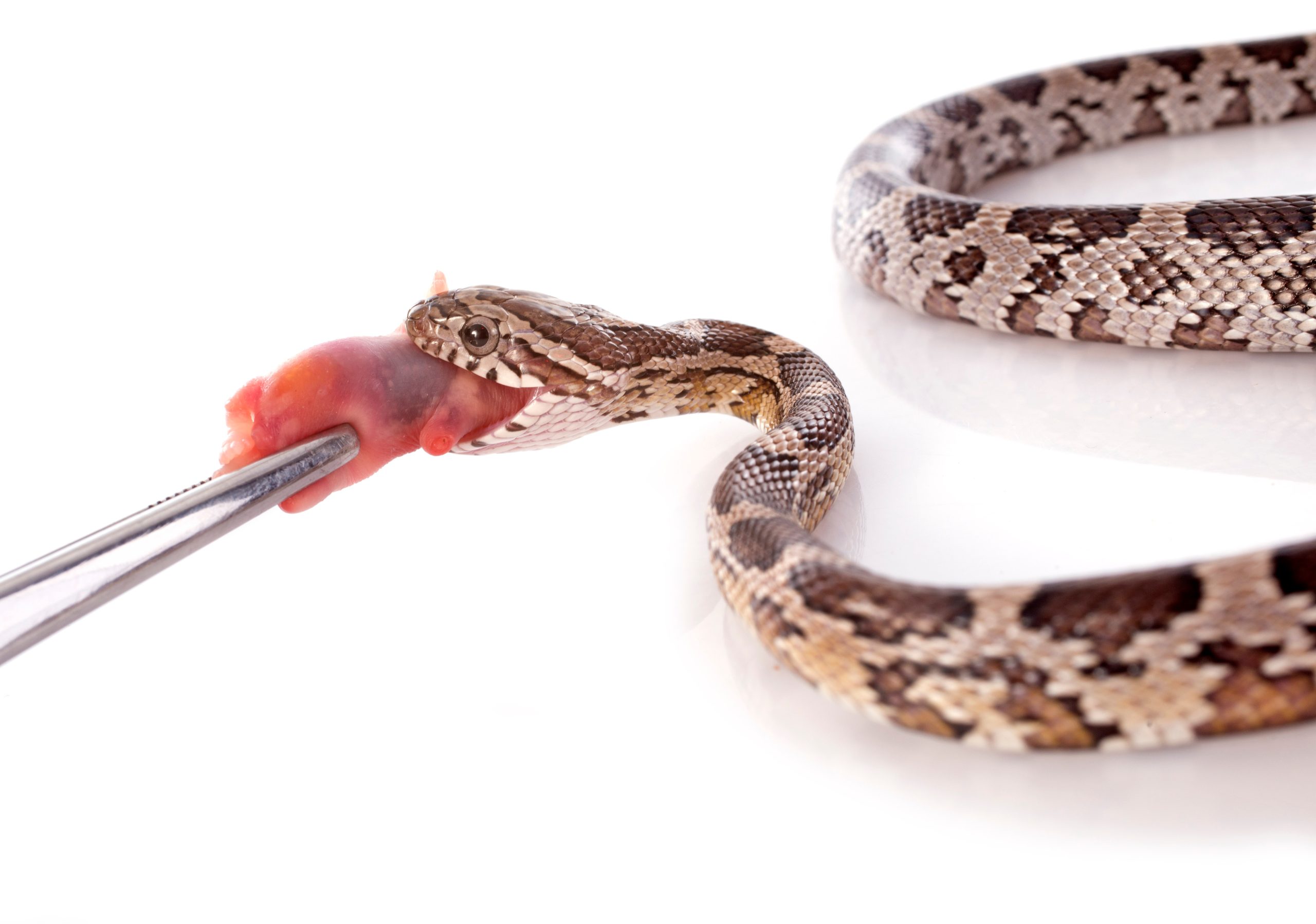
Feeding Challenges in Captive Reptiles: What Every Owner Should Know
Read more: Feeding Challenges in Captive Reptiles: What Every Owner Should KnowFeeding captive reptiles isn’t always as simple as offering food and watching it disappear. Snakes, lizards, and other reptiles can refuse meals, skip feedings, or react negatively to prey that isn’t properly sized or prepared. Understanding why these issues happen—and how to fix them—can prevent stress, illness, and long-term feeding problems. If you rely on…
Snake Frozen Feeder Weight Size Chart by by Big Cheese Rodent Factory
Read more: Snake Frozen Feeder Weight Size Chart by by Big Cheese Rodent FactoryChoose the right Frozen Feeders for your snake using this quick weight-based feeding chart. This quick snake feeder size chart helps reptile owners select properly sized feeder mice and frozen rats help support healthy digestion, growth, and consistent feeding for hatchlings, juveniles, and adult snakes. Use this page when you’re ordering and want a fast,…
Frozen Feeder Shipping Explained: How Frozen Mice and Other Feeders Arrive Safely
Read more: Frozen Feeder Shipping Explained: How Frozen Mice and Other Feeders Arrive SafelyIf you’re searching for frozen feeder shipping, frozen mice delivery, or wondering “do frozen feeders arrive thawed?”, you’re not alone. These are some of the most common questions reptile keepers, breeders, and wildlife professionals ask before ordering online. At Big Cheese Rodent Factory, frozen feeder animals are shipped using a proven system designed to keep…
Frozen vs. Live Feeders: Which Is Better for Your Reptile?
Read more: Frozen vs. Live Feeders: Which Is Better for Your Reptile?Choosing the right feeder prey is one of the most important decisions you’ll make for your reptile, bird of prey, or carnivorous animal. At Big Cheese Rodent Factory, we hear this question every day: Should I feed live prey or frozen feeders? While both options exist, experienced keepers, breeders, veterinarians, and zoos overwhelmingly prefer frozen…
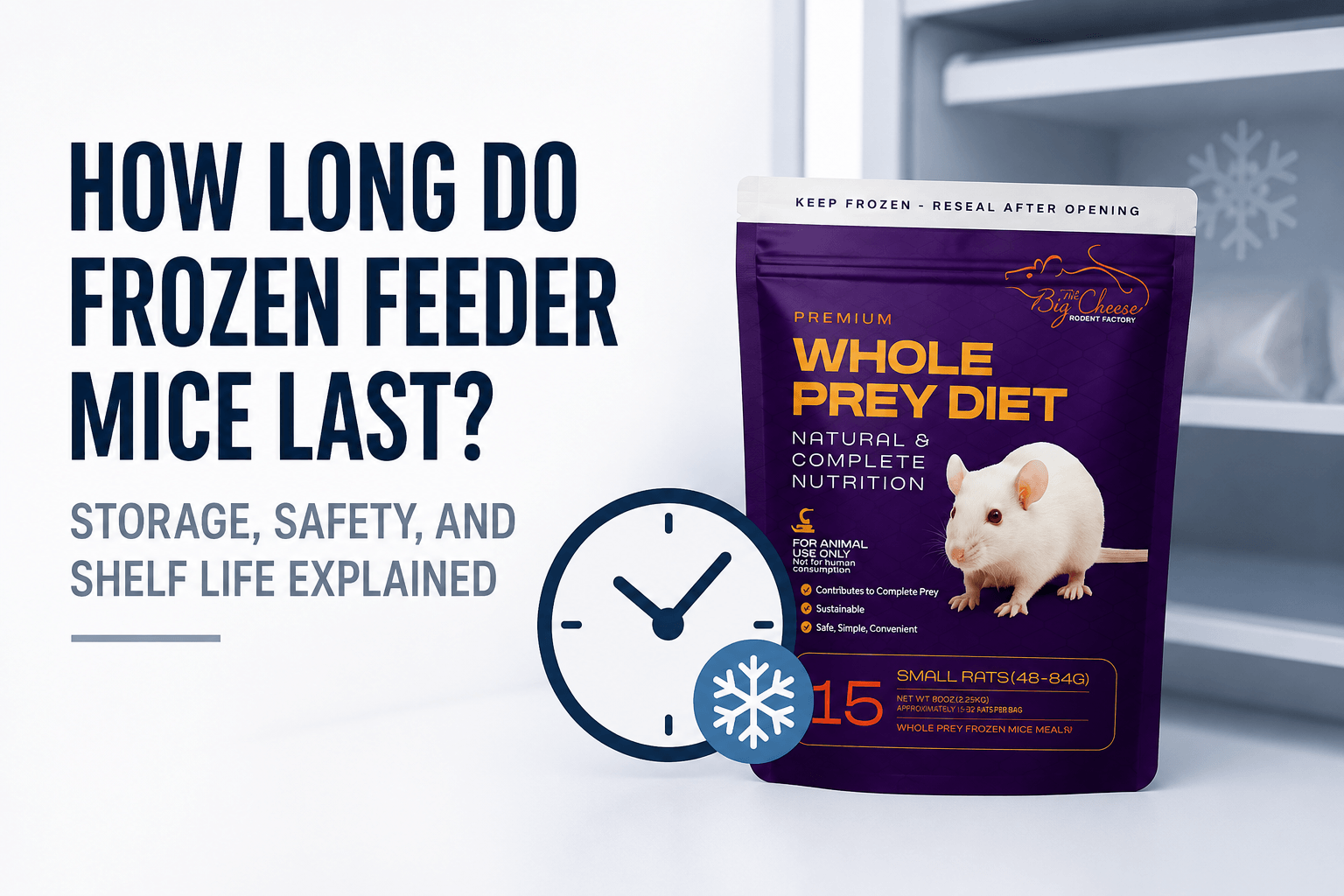
How Long Do Frozen Feeder Mice Last? Storage, Safety, and Shelf Life Explained
Read more: How Long Do Frozen Feeder Mice Last? Storage, Safety, and Shelf Life ExplainedHow long do frozen feeder mice last? This is one of the most common questions reptile owners, breeders, and wildlife caretakers ask—and for good reason. Proper storage directly affects feeder safety, nutritional value, and your animal’s health. At our facility, all feeder mice and feeder rats are vacuum sealed before freezing, which significantly extends shelf…
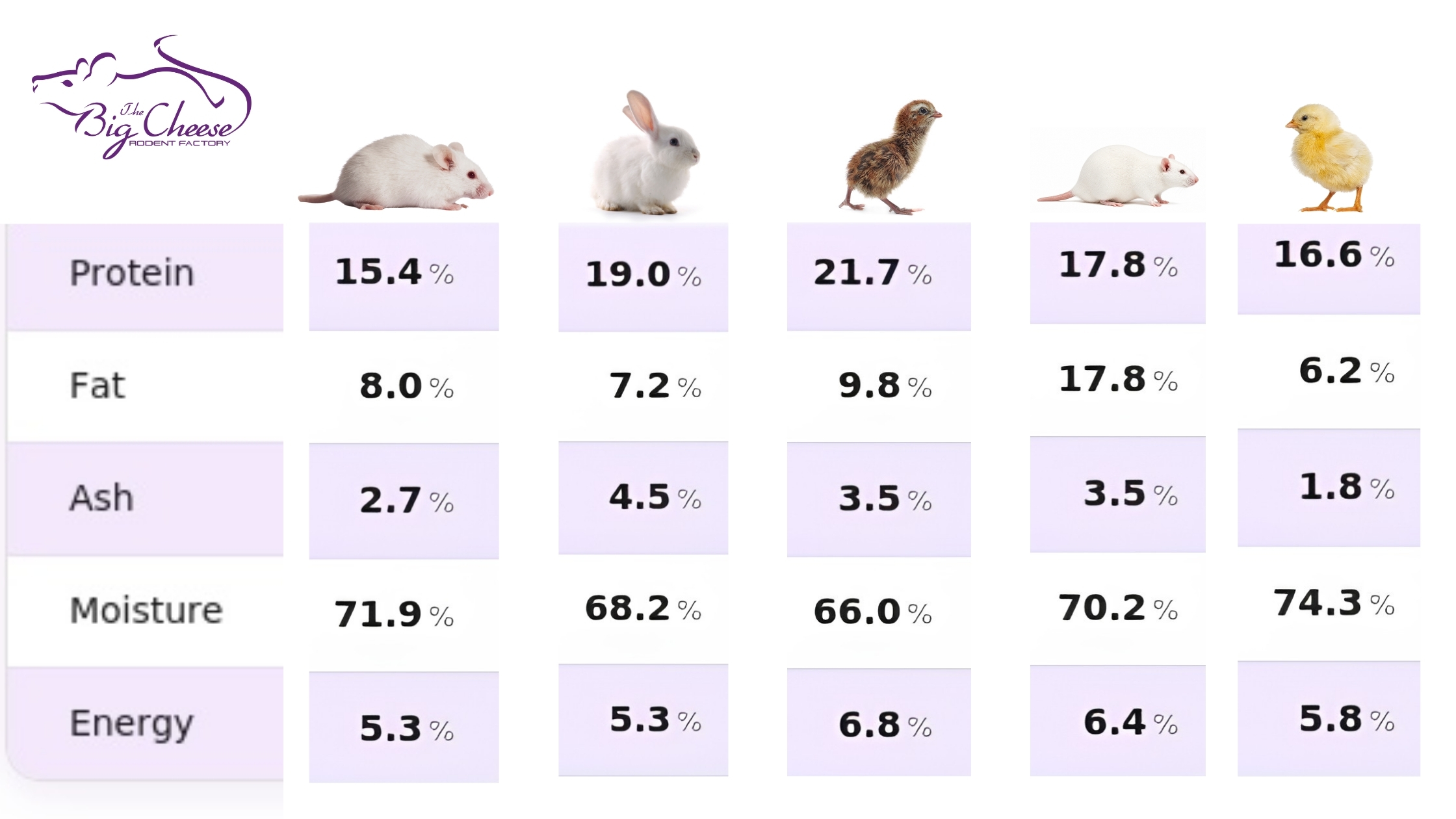
Frozen Feeders Animal Nutrition Guide: Protein, Fat & Whole Prey Comparison Chart
Read more: Frozen Feeders Animal Nutrition Guide: Protein, Fat & Whole Prey Comparison ChartThe nutritional content of frozen feeders animals varies based on age, size, and diet, but the values below represent average whole-prey nutrition commonly used by veterinarians, breeders, and zoological facilities. These values are provided for comparison purposes and help guide proper prey selection. Whole Prey Nutrition: Why Feeder Variety Matters Different feeder animals provide different…
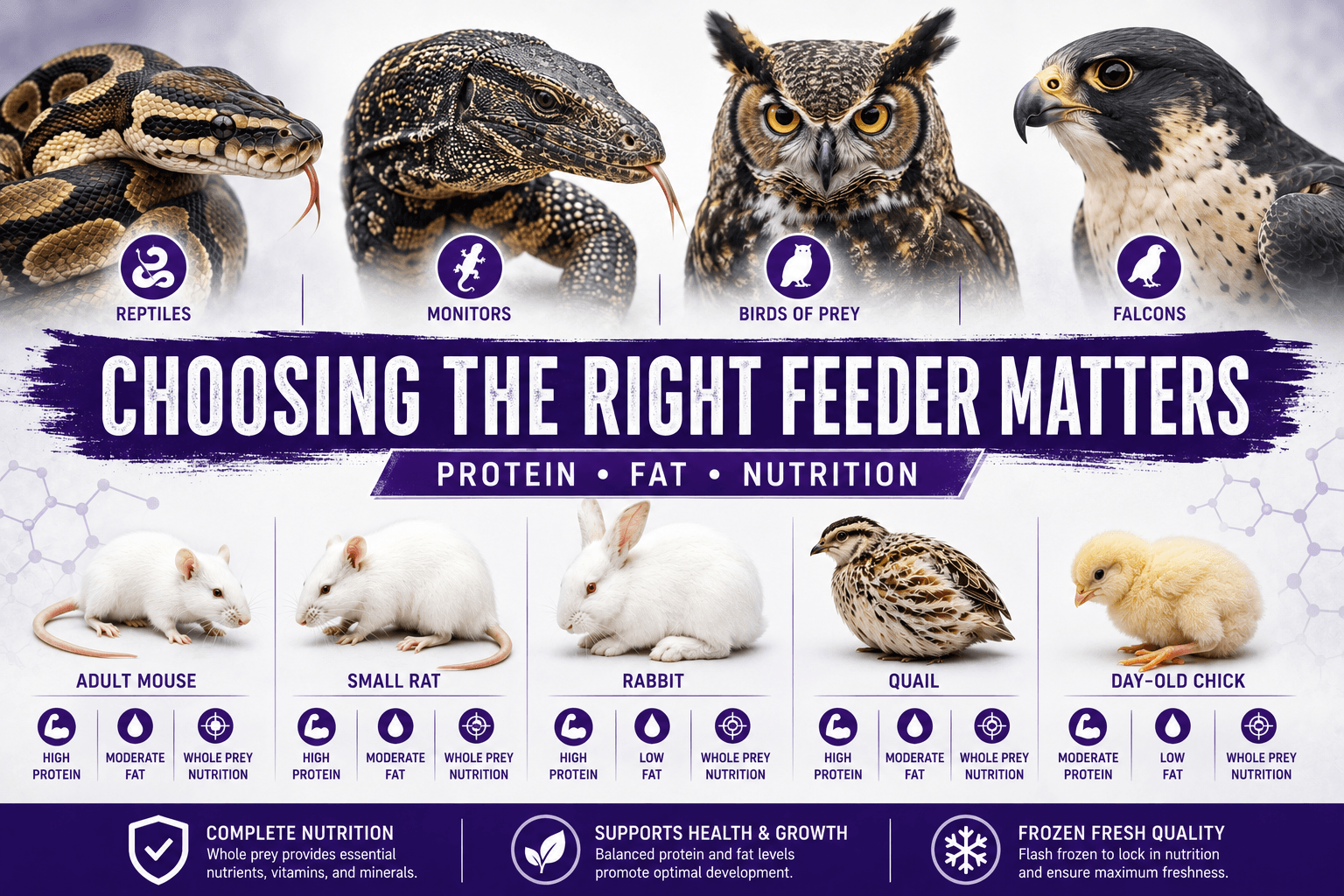
Nutritional Differences Between Feeder Mice, Rats, Chicks, Quail, and Rabbits
Read more: Nutritional Differences Between Feeder Mice, Rats, Chicks, Quail, and RabbitsWhen feeding reptiles, birds of prey, mammals, or other carnivorous animals, choosing the right feeder animal matters. Different prey species offer different nutritional profiles, fat levels, bone density, and organ content. Understanding these differences helps ensure proper growth, health, and longevity for animals in captivity. This guide breaks down the nutritional differences between Frozen Mice,…